

Life in the Creative In-Between
On making something out of nothing

At some point, every creative hits a phase that nobody prepares them for. Not the beginning, which comes with its own naivety, and not the arrival, which everyone is busy romanticising. It’s the in-between phase where the work is real, the effort is there, but nothing seems to be shifting yet. You’re doing everything you’re supposed to do, and still, it feels like no one is seeing it. Progress feels slow, and the distance between where you are and where you can see others standing starts to feel less like a gap and more like a verdict.
That is the in-between. And it is where most creative careers actually quietly live for longer than anyone admits.
I was having a conversation with my sister the other day on how draining it can get to grind so hard but receive no return. She said something that has stayed with me: You keep going not because it makes sense but because you have a goal at the end. That solidified things for me, and even though I haven’t fully come to a place of accepting that the middle phase is great for growth, I thought to share some takes.
Neither Here Nor There
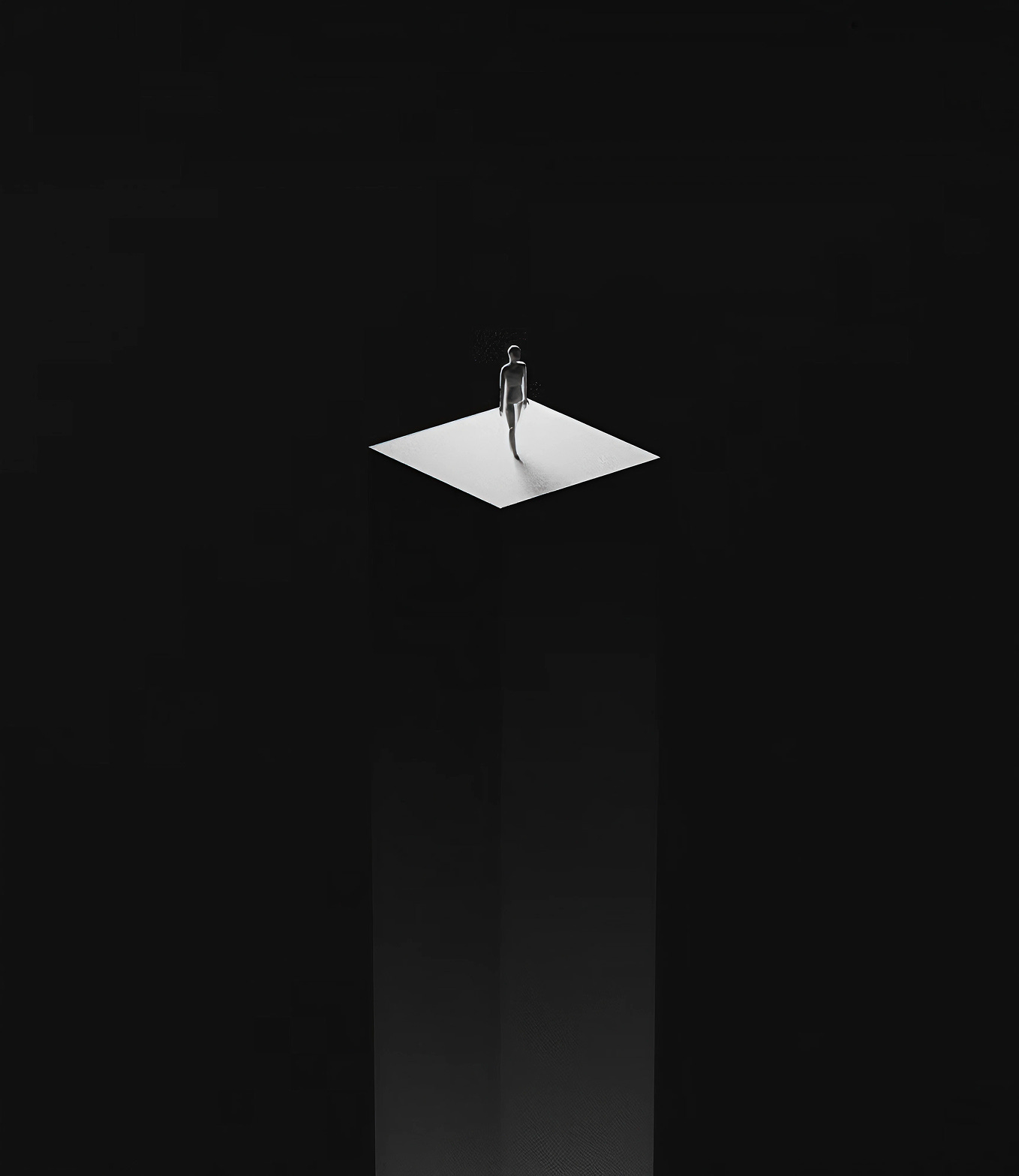
Psychologists have a word for this kind of transitional space. Liminal, from the Latin limen, meaning threshold — the space between what was and what has not yet arrived. It is, by design, disorienting. Not because something is going wrong, but because being mid-transition means the ground beneath you is not yet solid. You have left one place and have not settled into another, and that suspension, however temporary, takes a real toll on how you see yourself and your work.
For creatives, this phase rarely announces itself and even more rarely resolves quickly. It stretches across months, sometimes years, and it tends to revisit you at different points in a career, not just at the beginning. You can be three years in, with a growing body of work and a clearer sense of direction, and still find yourself back in the in-between — where the effort is no longer in question but the recognition remains inconsistent, you are past the starting line but nowhere near the finish. Basically, you are neither here nor there.
What makes it particularly hard is that the creative landscape offers very little language for this phase. The vocabulary available is almost entirely outcome-oriented — debut, breakthrough, arrival, launch. The process that precedes all of that is largely undocumented, which means the person living inside it has almost no cultural reference point for what they are experiencing. You do not see the in-between represented. You see the before and the after, stitched together so cleanly in interviews and profiles and success narratives that the middle disappears entirely. And when you cannot see your experience reflected anywhere, it becomes very easy to conclude that yours is uniquely prolonged, uncertain, or a sign that something has gone wrong. Most of the time, it has not. It is just rarely spoken about honestly enough for you to know that.
We discussed in The Long Game of Consistency how longevity in creative work is less about talent and more about the willingness to keep showing up before the results justify the effort. But there is a layer to that conversation worth pressing into further — what that showing up actually feels like from the inside, when no external signal is confirming that it means anything at all.
The grind, in its truest form, is not cinematic. It can look like a regular Tuesday where you open the file again, or pick up the camera again, or sit down to write again, and produce something that goes mostly unnoticed, and then do the same thing on Wednesday. It is the quiet, repetitive, often isolating work of developing something before the world has decided it is worth paying attention to. You are experimenting without knowing what you are looking for. You are producing without a clear sense of who it is for you, and finding a voice in a room that has not yet decided to listen, but you have to keep talking anyway.
Making it now feels harder than ever. Everything is louder, faster, and more public. What people usually see is the finished work and the recognition. What they don’t see is all the effort it took to get there.
Because the industry rewards what is already visible and working, not what is still developing, it can feel like you’re getting no real feedback while you’re in the middle of your process. You’re being judged by results when you’re still figuring things out. You’re measured by reach when you’re still finding your voice.
And over time, all that noise can start to feel like a reflection of where you stand, when in reality, it’s just not built to notice you yet.
What the Silence Does to You
The in-between is not just physically demanding. It quietly reshapes how you think about yourself and the work. When external validation is scarce, the internal narrative fills the space, and it does not always fill it nicely. You begin to question the quality of what you are making in ways that feel less like honest critique and more like slow erosion. The silence starts to sound like an answer. The lack of movement starts to feel like confirmation of something you were already afraid might be true.
This is made worse by the fact that you are rarely experiencing the in-between in isolation. You are watching other people, often people who started around the same time, gain traction in ways that yours has not yet. And as we explored in the previous piece on competition and comparison, that kind of upward social comparison rarely stays neutral.
It bleeds into how you read your own progress. Their momentum becomes a mirror, and the reflection is not always kind. You begin to wonder whether the problem is the work, or the timing, or something more fundamental about what you are doing and why. The uncertainty multiplies, fatigue sets in, and the urge to keep going even when it does not make sense starts to feel less like drive and more like stubbornness; you are no longer sure if it serves you.
What is important to note here is that this psychological weight is not a personal weakness. It is a structural condition. The industry is not built to support the person in development. It is built to celebrate the person who has already arrived. Which means that anyone in the middle is essentially navigating a landscape that was designed for a version of them that does not yet exist, while being asked to sustain the energy and conviction of someone who has already made it through.
Experimentation Is Not a Detour
One of the most damaging ideas about the in-between phase is that it’s just a waiting room. Something you sit through until the real work begins. But that isn’t true. The in-between is where the work actually starts to take shape.
This phase helps you discover what you are genuinely drawn to when nobody is watching, what you keep returning to even when it gains no traction, and what survives the absence of applause and the indifference of the algorithm. This is where your solid foundation is built.
If you study the greats in any field, you’ll see they went through the same phase—long stretches of work with little to show for it. They faced creative blocks, pursued directions that didn’t land, and abandoned projects sprinkled with a dose of self-doubt. Yet, over time, the in-between became the force that propelled their work to where it needed to be.
And yes, it’s hard to see the silver lining when you are deep in it. When you are in the middle of a phase that offers no confirmation, the experimentation does not feel like foundation-laying; it feels like wandering. The distinction between the two is usually only visible in retrospect, which is perhaps the cruelest thing about the in-between — the value of what you are doing is real, but the evidence of that value arrives on a delay you have no control over.
Staying Sane in the Middle
There is no clean resolution to the in-between, which is part of what makes it so difficult to write about. It does not end on a particular date. You do not graduate from it. You move through it gradually, and often only recognise that you have when you look back from wherever you eventually land.
But there are ways of moving through it that are less corrosive than others. Take this with a pinch of salt if you will.
The first step is to stop measuring progress by visibility. In the in-between, growth is quieter—it’s widening your skills, sharpening your instincts, and slowly developing a perspective that is uniquely yours. None of this shows up in numbers, but it all matters.
The second is to resist the temptation to speed up in response to the noise around you. The creative landscape will always be moving faster than you can imagine. Matching that pace at the expense of depth is one of the more common ways the in-between extends itself unnecessarily.
And the third, perhaps the hardest, is to hold your own timeline with enough conviction that someone else’s does not destabilise it. This is not about indifference. It is about knowing, at some fundamental level, that the work you are building has its own rhythm, and that rhythm is not obligated to align with an industry that was never designed with your specific journey in mind.
The in-between is not failure, stagnation, or a wrong turn somewhere along the way. It’s the space where most meaningful creative work actually happens. There’s no pressure from the audience, no instant validation, and no clear timeline. It’s just you, your curiosity, and the work itself. All the lessons you develop here aren’t always visible, but they quietly shape everything that comes after.
And maybe that urge to keep going, even when it doesn’t make sense, is actually the smartest creative move you can make.