

Studio Note 5: Why Worlds Need Narrative to Move
The missing layer most brands skip, and why it's the difference between static identity and cultural relevance.

Building a brand world is rare. Most brands never get there. They have guidelines, maybe a visual system, but not the internal logic that makes decisions feel inevitable. But even the brands that build worlds often stop there. They construct the universe but forget to give it momentum. What’s missing is narrative: the force that takes a static brand world and gives it direction, allowing it to evolve, respond to culture, and stay relevant without losing coherence.
This isn’t about vision statements or mission declarations listing company goals. Those sit in decks and get referenced in all-hands meetings. Brand narrative is different. It’s the anchor that tells you where the brand is going, what it’s responding to in culture, and why any of that should matter to the people you’re trying to reach. It’s the thread that connects what you’ve built (your world) to what you’re doing about it (your work). Think about Patagonia. Their world includes environmental responsibility, quality craftsmanship, and outdoor culture. Values baked into every product, every design decision, every piece of communication. That’s worldbuilding. But their narrative is what gives that world momentum: “We’re in business to save our home planet.” That’s not a tagline. It’s the direction of travel. It’s the lens through which every decision gets filtered. When they run “Don’t Buy This Jacket” campaigns or sue the government over public lands, those moves make sense not because they match the brand guidelines, but because they advance the narrative.

The narrative is what lets Patagonia evolve (launch new product categories, take political stances, shift their business model) without losing what makes them Patagonia. The world provides the logic. The narrative provides the momentum.
Here’s what narrative actually does that guidelines and worldbuilding alone cannot:
It gives the world a direction of travel.
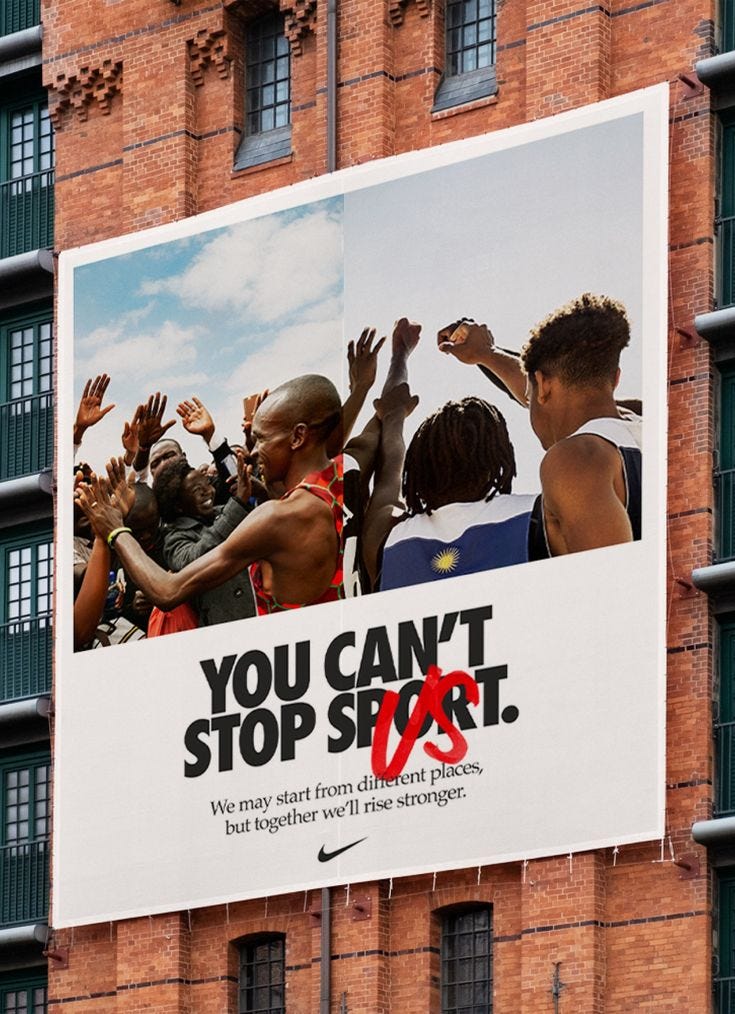
Worlds have physics: rules about what's possible, what fits, what feels native versus imported. Narrative gives that world momentum. It answers: Where is this brand going? What is it responding to? Why does it matter right now, in this cultural moment? Nike's world includes athletic performance, self-improvement, and the democratization of sport. But their narrative is "If you have a body, you're an athlete." That's what drives everything forward. It's why they can move from professional athletes to everyday runners to social justice campaigns, and it all feels coherent. The narrative justifies the expansion. It gives the world permission to grow.
It allows brands to evolve without fragmenting.
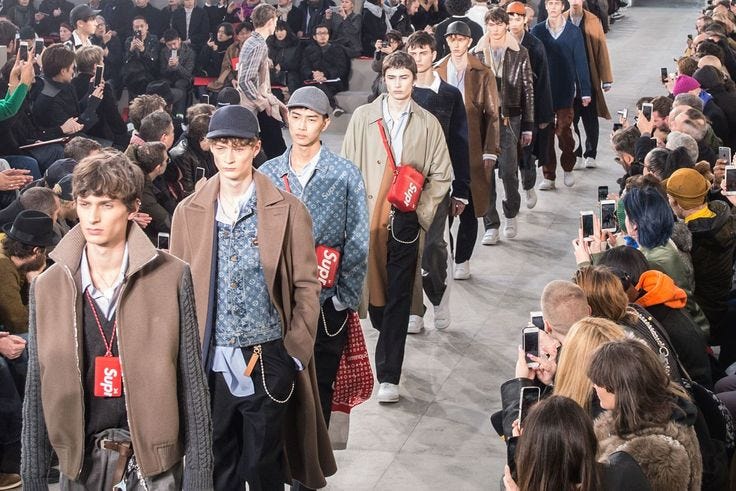
Guidelines risk becoming constraints. "We always use this typeface." "We never do collaborations." "Our tone is always optimistic." Those rules work until culture shifts or an opportunity emerges that the guidelines don't account for. Narrative gives you the flexibility to respond. Supreme's world is built on scarcity, subcultural credibility, and irreverence. Their narrative is about cultural capital: being in the know, being first, being part of something that can't be bought with money alone, only with cultural fluency. That narrative is why a collaboration with Louis Vuitton worked. On the surface, luxury fashion and streetwear don't belong together. But both brands operate on narratives of exclusivity and cultural credibility. The collaboration wasn't off-brand; it advanced both narratives in a way that made sense to people immersed in both worlds. Without a narrative, that move looks opportunistic. With it, it feels inevitable.
It creates the bridge between your brand and culture.
Strategy uses context to build confidence around creative ideas. World-building creates the internal logic. Narrative is how you read what's happening in culture and respond in a way that feels rooted, not reactive. Liquid Death sells water. In a world where wellness brands whisper about purity and hydration, Liquid Death built a narrative around rebellion and absurdity. Their world includes heavy metal aesthetics, environmental activism (they're in infinitely recyclable aluminum, not plastic), and a refusal to take themselves too seriously. Their narrative: we're here to murder your thirst and make hydration less boring. That narrative lets them sponsor punk shows, create over-the-top horror-themed marketing, and position canned water as countercultural, all while actually being a sustainable product solving a real problem. The narrative is what makes the work feel consistent, even when the executions are wildly different. It's the north star that every creative decision orbits around.
It makes your brand participatory, not just recognizable.
We live in what researchers call a "narrative economy," where the value of products is increasingly tied to the stories they help people tell about their own identity. People don't buy things just because they work or look good. They buy things that let them participate in a narrative they want to be part of. You don't just recognize Nike. You participate in the narrative of pushing your limits, of treating your body like it matters, of defining yourself as someone who doesn't accept excuses. When someone wears Nike, they're not just wearing a swoosh. They're aligning themselves with that story. The brand becomes a tool for identity expression. Glossier understood this. Their world is minimalist, effortless, and democratic: beauty that enhances rather than transforms. Their narrative: "Skin first, makeup second. You look good." It's an invitation to participate in a story where you don't need a full face of makeup to be beautiful, where the goal is to look like yourself but better. Every product launch, every piece of content, every design decision reinforces that narrative. And when people buy Glossier, they're buying into that story about who they are and how they approach beauty. This is the difference between a brand people know and a brand people feel connected to. Recognition is awareness. Participation is loyalty.
Here’s what most brands get wrong: they think narrative is the same as “brand story,” the founder’s origin tale, the “why we started this company” deck slide. But a brand story is backward-looking. It’s where you came from. Brand narrative is forward-looking. It’s where you’re going and why anyone should care. Your brand story might be interesting. Your brand narrative is essential. Because narrative is what gives people a reason to pay attention beyond the first interaction. It’s what lets them know this isn’t just a transaction. It’s an ongoing relationship with a brand that’s moving somewhere, responding to something, standing for something that matters right now. And here’s the piece most brands miss entirely: narrative isn’t something you write once and file away. It’s something you live. It shows up in every decision: which collaborations you take, which cultural moments you respond to, what you say no to, even when it would be profitable. Patagonia doesn’t just say they’re in business to save the planet. They close stores on Black Friday. They donate 100% of profits to environmental causes. They build products designed to last decades. The narrative isn’t marketing copy. It’s the organizing principle.
When you have a strong narrative, your world can evolve without losing coherence. You can launch new products, enter new categories, and take unexpected stances, and it all makes sense because it’s advancing the same story. When you don’t have a narrative, every new move feels random. You’re reactive instead of directional. You’re chasing relevance instead of creating it.
This is what we mean when we talk about building from inside culture rather than observing it from the outside. Narrative is how you root yourself in what’s happening now while staying true to the world you’ve built. It’s the difference between a brand that borrows aesthetics because they’re trending and a brand that responds to cultural shifts because they’re part of the culture, not just marketing to it.
Guidelines tell you what your brand is. Worlds give you the logic of how your brand behaves. Narrative tells you where your brand is going and why that direction matters. You need all three. But without narrative, you’re building something beautiful and static. With it, you’re building something that moves and invites people to move with you.
As someone who is currently building, this was so insightful. Thank you😊
This definitely stood for me.
”Narrative is how you read what's happening in culture and respond in a way that feels rooted, not reactive.”