

The Great Time Theft
The Most Expensive Thing You’re Paying For Isn’t on Your Bill.

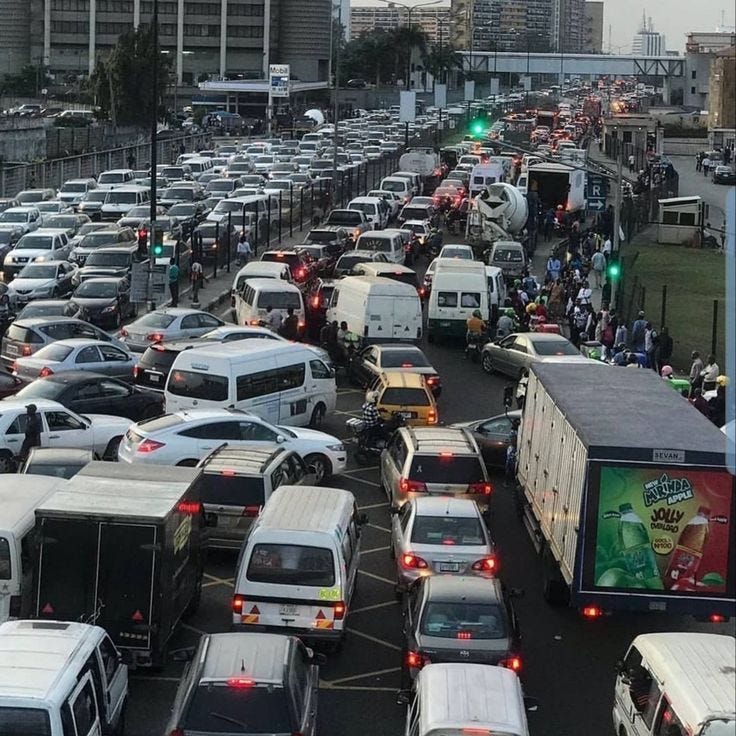
It is 7:45 in the morning. You left home early—you always leave early because you never know what to expect on these roads. You are sitting in traffic that hasn’t moved in eleven minutes, watching the chaos exist around you, and someone behind you keeps blaring their horn like they cannot see that you are all stuck in the same predicament. You have a 9 a.m. meeting. You will probably make it. You have to stay hopeful. This is not a bad morning. This is a regular Tuesday.
We have learned to do remarkable things with waiting. We send emails from standstills, conduct arguments and love affairs over WhatsApp, and bring full offices into our laps via laptops so that the hours trapped in transit feel productive. We have become virtuosos of the interrupted day.
We are living through a compounding catastrophe of systemic friction. Across our cities, institutions, and infrastructure, broken systems are systematically consuming human time in ways we do not see as theft. We monitor our bank accounts for unauthorised charges, scrutinise our utility bills for hidden fees, and lock our doors against intruders. If a corporation overcharged us every month, we would spend hours on the phone demanding a refund. Yet, we are systematically robbed of something far more valuable every single day, and we barely register the loss.
Unlike a financial robbery, this theft is invisible, structural, and gone forever. A functioning society should operate as a friction-reduction engine, streamlining the baseline logistics of survival so its citizens can free up their energy for higher-order pursuits. When it fails, it leaves its people to pay an unmapped, lifelong existence tax.
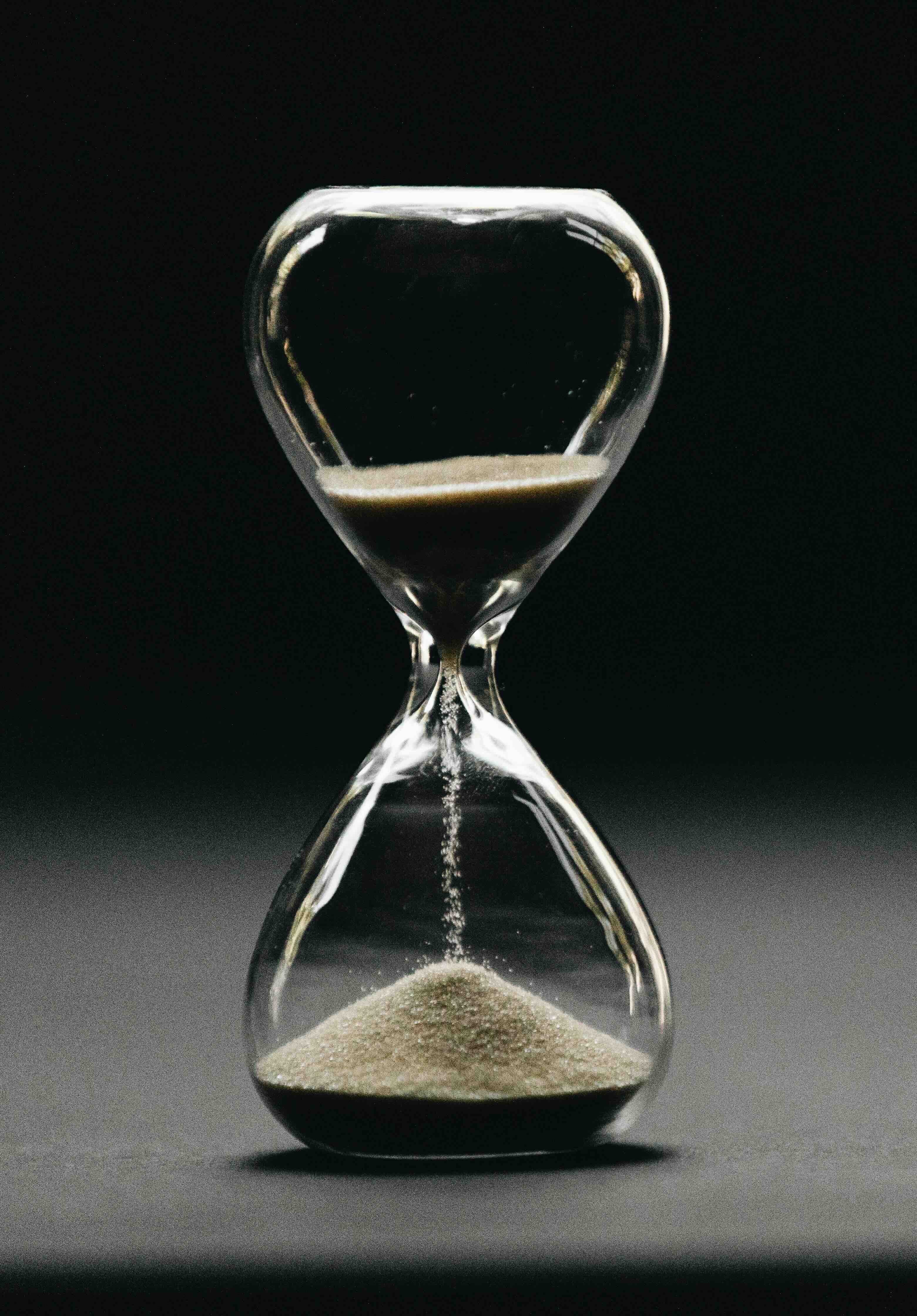
The Phantom Years of the Lecture Hall
To understand how you ended up in this specific car on this specific Tuesday, staring at the agberos (touts) who have started fighting one another. You think back to the years that disappeared before your career even began.
When you were nineteen, you enrolled in a four-year degree program with a timeline already mapped in your head: graduate at twenty-three, enter the job market, build a foundation — maybe even launch that tech-consulting firm you and your roommates stayed up arguing about. But the system had its own calendar. Institutional strikes froze the campus for months at a time. Total closures turned semesters into stagnant pools of waiting. Then there was the extra carryover a lecturer handed you simply because you refused to give in to their demands.
By the time you finally walked across the stage to collect your diploma, you weren’t twenty-three. You were twenty-six.
Those two and a half missing years weren’t just empty blocks on a calendar; they were an economic and personal subtraction. Because you graduated later, you entered a shifting, hyper-competitive job market with an older profile. The entry-level associate roles you planned to take were suddenly closed off, or the age caps for the premium graduate trainee programs had already expired while you were waiting for a strike to end.
You could not afford to wait any longer. You had to take the job you have now, the one that requires you to commute across the city at dawn, rather than the path you had spent your youth imagining. The tech-consulting firm never happened because the stamina required to hold on to an idea through thirty months of institutional limbo is a luxury few can afford. The system treated a chunk of your youth as a rounding error, but time does not come with an undo button.
The Evening Shift: Sourcing Light
The theft doesn’t stop when you finally get home from that job, either. It simply changes its format.
Think back to last Thursday. It was 8:30 p.m. You had managed to survive the evening gridlock early, walking through your front door with a rare spark of energy. You had planned to log onto an online professional certification course you paid for three months ago—a credential that might finally help you pivot out of this grinding routine. You sat down, opened your laptop, and hit the power switch.
Then DARKNESS. The power grid has shifted again.
The next three hours of your life were not spent studying. They were spent on the logistics of survival. You groaned, stood up in the dark, found your phone to use as a flashlight, and walked outside to the generator casing. You checked the oil, realised you were low on fuel, and had to negotiate with a local vendor down the street just to get enough petrol to keep the fans and the lights running.
By the time the generator was humming and the house was lit, it was 11:20 p.m. Your mental focus was shattered. Your ginger to cover at least two chapters of your coursework is completely drained. You closed the course tab, looked at your boss’s “urgent” messages, exhausted, and went to bed angry.
You didn’t just lose hours of electricity; you lost the compounding interest of what those long minutes could have built. According to data from Energy Growth Hub, individuals and small business owners in regions with volatile power grids spend 10% to 15% of their active time simply managing unreliability. Not building, not learning, not resting—just managing the failure of the system to do its job.
The Bureaucratic Labyrinth
And if you ever try to fix the things around you—if you ever decide to register a side business to break free from the employment loop, the system demands another tribute.
Two weeks ago, you stood in a municipal corridor that smelled faintly of old paper and industrial cleaner, watching a small digital clock on a white wall. The minutes ticked forward with agonising indifference. You had taken a half-day off work, braved the mid-day chaos, and paid an exorbitant amount to the secretary to let you in, all to submit a physical form to verify a digital document you had already uploaded twice online.
The clerk behind the counter wasn’t malicious; they were simply as exhausted and frustrated as you are in the grinding machine. You stood there for two hours because the “system was down.” When it finally came back up, you were told that a specific verification stamp could only be obtained at a completely different window across the building, which closes at 1 p.m.
You looked at your watch. It was 1:07 p.m.
This is the invisible graveyard of human potential. That gap is time you could have spent talking to customers, refining a service, or earning an income. Instead, the friction is set so high that the system literally eats your ambition before it can even launch.
The Danger of Perfect Adaptation
Perhaps the most insidious stage of the Great Time Theft occurs inside your own mind: you have stopped seeing it as a crime.
The human brain is a magnificent adaptation machine. It recalibrates constantly, redefining normal based on what it encounters repeatedly. Two hours in traffic becomes “the commute.” Six hours without power becomes “just another evening.” A two-year delay on graduation becomes “just how things are.”
You have built your entire life around this dysfunction. You wake up at 4:30 a.m. to beat a bottleneck that shouldn’t exist. You stash emergency bundles of physical cash in your glove box because you expect the digital payment network to collapse at the supermarket checkout. You invest in noise-canceling headphones not for music, but to drown out the constant roar of neighborhood generators so you can hear yourself think.
We praise this adaptability as “resilience” or “grit.” We celebrate our ability to hustle and navigate the chaos. But this celebration is a coping mechanism. When we normalize systemic friction, we forget what a functioning society is actually supposed to do.
A society’s infrastructure is a moral statement about whose time it values. When roads stay broken, power fluctuates, and institutions stall, the unwritten message is clear: your time is cheap, and it can be taxed without consequence.
Reclaiming the Ledger
The traffic is moving now. You check the clock: 8:45 a.m. You’ve been on the road for a hot minute, and you’re halfway there. You’ll make the meeting. But, you’ll spend the first ten minutes still mentally on the road, trying to shake off the exhaust fumes and recalibrate your frayed nerves before walking into the boardroom. Tomorrow morning, you will do this again.
To resist the Great Time Theft, we must first learn to see it clearly. Rain is a fact of nature; a three-hour wait at an office or a two-year delay on a university degree is a design failure.
Imagine what your life would look like if you suddenly received a refund of all the time stolen from you this year. Imagine the hobbies you would finally pick up, the dinners with friends that wouldn’t feel rushed, the extra hours of sleep, the businesses started, or the quiet afternoons spent doing absolutely nothing at all.
That unfilled space is where human culture, innovation, and happiness actually live. It is the most expensive thing we are currently paying for, and it is time we started demanding our refund.