

The Spaces That Define Us
Rethinking African architecture beyond style and structure.

Architecture is the art and science of developing spaces into expressions of identity for the utility of culture - ILÈMRÉ
This means every piece of architecture that exists is both identity and purpose infused together for the sole purpose of expression, making it one of the primary hallmarks of social identity. It is easy to distinguish a palace from the farmer’s hut, as it is the presidential villa from the central bank or even a cathedral.
Interestingly, although the same individuals may occupy these spaces, the roles they perform and the behaviours they exhibit often change with the environment. Architecture does not merely accommodate identity; it actively shapes its expression. A fine example would be how a priest of authority would observe a different role in procession when invited to the presidential villa or the seat of the senate.
Identity sits at the core of architecture as much as functionality does, and probing into the history and progression of African architecture—a lot has been lost.
It would be easy to reduce African architecture to visible markers—lush courtyards, perforated clay walls, generous windows suited to tropical climates, or natural materials that respond to the environment. Yet these are only the outward expressions of something much deeper. African architecture is fundamentally a reflection of how communities understand nature, family, spirituality, governance, and everyday life.

The essence of why we build the way we do is beyond the markers that characterise us, but a combination of how we’ve developed as a culture and what we now consider important in our ever-changing world.
That reflection has not disappeared; it has evolved. As African societies have changed, so too have the spaces we inhabit.
However, before we consider who we are by the spaces we exist in, we must first probe the dialogue as to:
When and Why Did We Stop Building for Ourselves?
If architecture is an expression of identity, then it follows that changes in our built environment reflect changes in who we believe ourselves to be. African architecture did not disappear overnight, nor was its evolution frozen in time.
Like every architectural tradition, it adapted to new technologies, new societies, and new ideas. Yet there is one historical moment that fundamentally altered the direction of that evolution.
Colonial rule introduced more than new governments; it introduced new ways of building, new planning principles, and new ideals of what constituted progress. European administrative buildings, churches, railways, and residential quarters became symbols of authority and modernity.
African architecture did not cease to evolve with the arrival of colonial rule. What changed was the standard by which architecture was judged. Buildings that once derived their value from responding to local climate, materials, customs, and social life increasingly came to be measured against imported ideals of permanence and prestige.
Over time, these ideals influenced architectural education, urban planning, and even public taste. But to attribute every change in African architecture to colonialism would be to ignore the agency of post-independence societies, globalization, economic pressures, and our own evolving aspirations.
The question, then, is not whether African architecture survived—it did. The more pressing question is whether contemporary African architecture can once again express African ways of living rather than merely reproducing inherited models of modernity. It is this question that a new generation of architects has begun to answer.
Architects of the Art
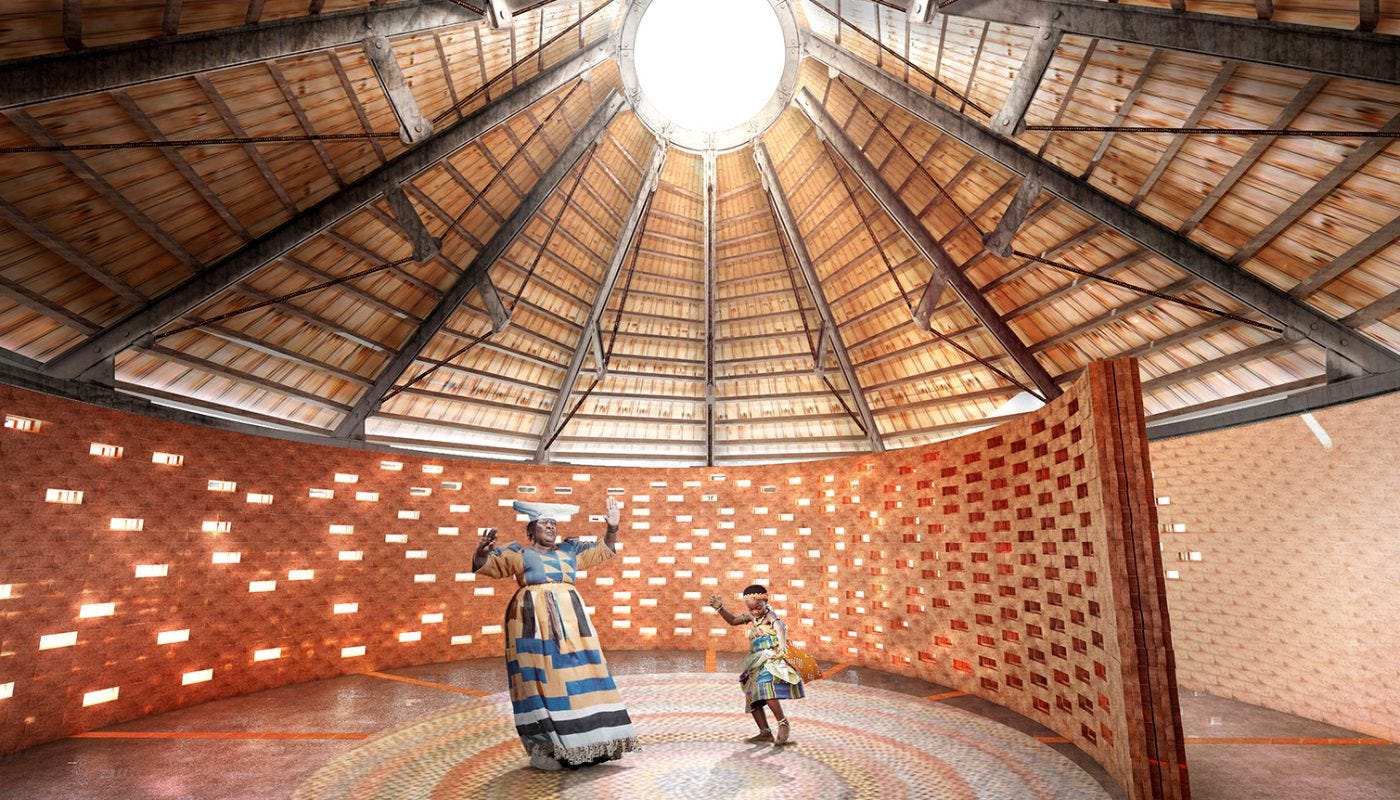
The resurgence of African architecture is not a return to the past, nor is it a rejection of modernity. It is an attempt to redefine what architecture should express: not borrowed aspirations, but the histories, realities, and futures of the people who inhabit these spaces.
No longer confined to cultural monuments, African identity is increasingly finding expression in contemporary architecture as a new generation of architects consciously reimagines the built environment through an African lens, creating structures whose identity extends beyond aesthetics to encompass purpose, philosophy, and lived experience.
One such is Nigerian Tosin Oshinowo, who believes that architecture must serve as a backdrop for life, enabling people to interact with spaces in meaningful ways. Through her work, she emphasises that design must not only reflect the physical environment but also align with the social and cultural dynamics of the people who inhabit them.
Her work demonstrates that African architecture is not an attempt to recreate the past, but to reinterpret it—drawing from indigenous ways of living while responding to contemporary realities.
Alongside her is Nigerien architect Mariam Kamara, who extends this philosophy by treating architecture as an instrument of dignity. Through schools, cultural centres, and public institutions, she demonstrates that well-designed spaces can strengthen communities, preserve memory, and affirm identities that have too often been overlooked in the pursuit of imported models of development.
Christian Benimana, a Rwandan architect, shifts the conversation from preservation to possibility. His vision is not merely to recover an African architectural language but to cultivate a generation of architects capable of creating new forms rooted in African realities. For him, the future of African architecture lies not in reproducing tradition but in allowing local knowledge, climate, and communities to shape contemporary innovation.
This observation matters because it confronts one of the most enduring misconceptions about Africa: that it is an architectural wasteland, lacking the monumental works that testify to the greatness of a civilization.
Yet this narrative was powerfully dismantled by Ghanaian-British architect Sir David Adjaye OBE in his 2010 BBC documentary, highlighting centuries of sophisticated urban planning, monumental cities, indigenous engineering, and architectural traditions that long predated colonial rule.
Conclusion
Perhaps this is why architecture matters far beyond the buildings themselves. Every society eventually constructs physical evidence of what it believes about itself. Its homes reveal how it understands family. Its schools reveal what it values. Its public spaces reveal what it considers worth gathering for. Its monuments reveal what it chooses to remember.
The question facing African architecture, therefore, is not whether we can build taller skylines or more ambitious cities. It is whether those spaces speak with our own voice.
To define African architecture is not to prescribe a particular style, material, or silhouette. It is to insist that our buildings emerge from our climate, our cultures, our histories, and our aspirations.
Architecture, after all, is more than construction—it is civilization made visible. And if our spaces shape the stories future generations tell about us, then building for ourselves is not merely an architectural pursuit. It is an act of cultural definition.