


I have been thinking a lot about what it means to document culture. It is, for one, the ethos behind all that I do at Unruly. After much thought, I found that at its most basic, documentation is preservation. It says ‘this existed here’, ‘this person thought this way’, ‘this thing was made under these conditions, at this moment in time’. Without it, things disappear, from the record, and from the collective memory of the people they belonged to. Craft, a way of seeing, of doing things, doesn’t just survive on its own. They survive because someone, somewhere, chose to record them carefully enough that they can be passed down.
In a note I made here regarding my thoughts, someone pushed back with an idea from Vedic philosophy: that every experience, every action, every trauma leaves an indelible impression in the deepest layer of consciousness. That collective memory, by this account, cannot truly be erased. Even when the language is gone, when the cultural structures have collapsed, something persists beneath the surface, waiting to be integrated. It’s a beautiful idea, but I think it proves something slightly different from what it intends. People can carry the weight of what was lost without knowing what it was. The absence can be felt in the body, in recurring patterns, in grief even that you can’t quite name, without the actual content of what was lost surviving in a manner they can retrieve. The village elder who still knows which songs of praise belong to which lineage is not carrying the same thing as the community that lost that elder before he was able to pass the knowledge on. One has the content; the other has a gap where that content used to be, without the content itself.
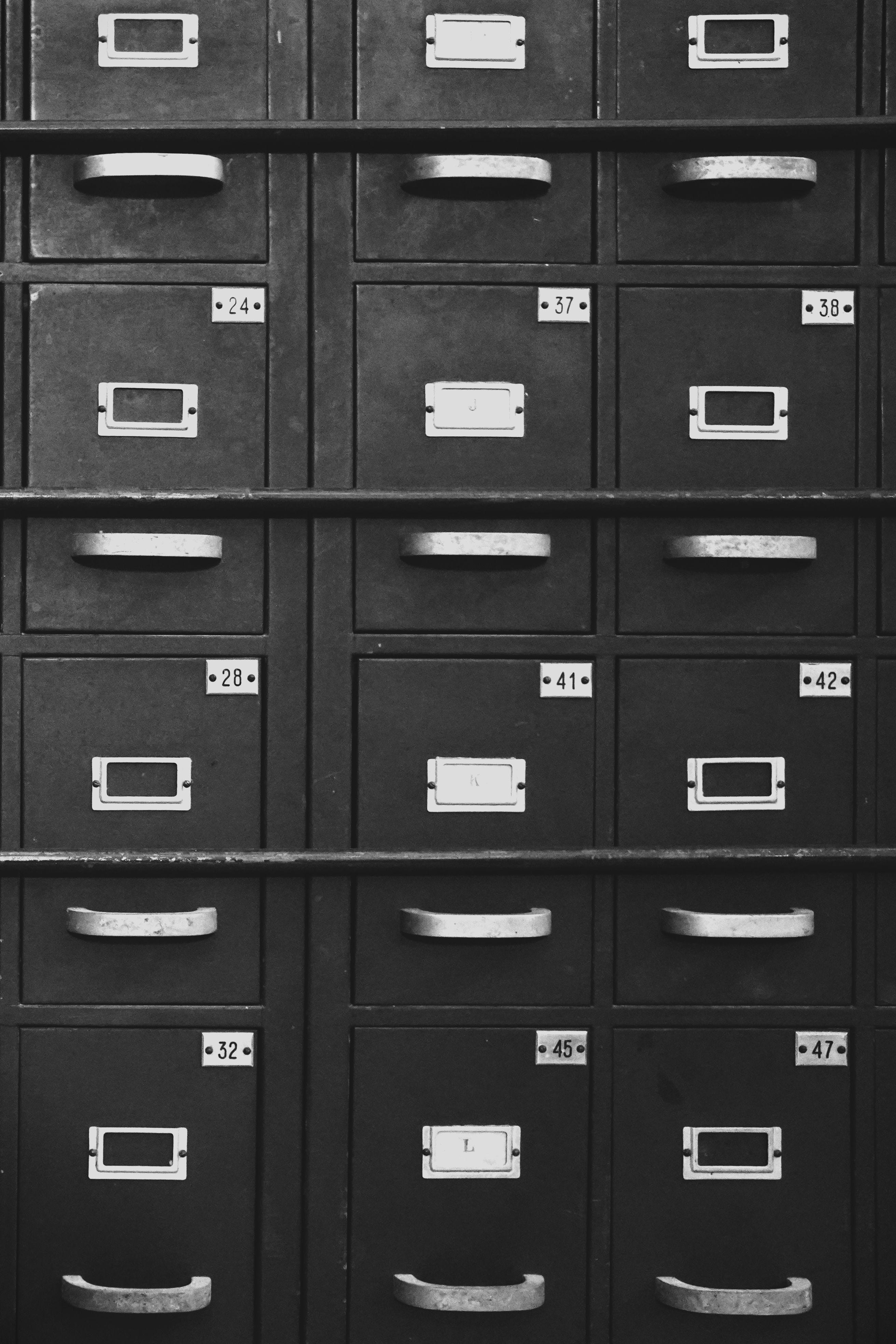
I also found that documentation simply cannot be neutral. The moment you decide what to document, how it should be framed, whose voice to center, what questions to ask, you are making a selection, and an argument. You are saying that this specific thing matters, and is worth preserving.
The archive of African culture that exists in the world’s major institutions, from museums to libraries and research at universities, was built largely by people who were not African, asking questions that were not nuanced to us, framing what they found through their own individual and societal frameworks and biases, which were not built to understand what they even found. The result they gathered was clearly incomplete, as it skewed in a specific direction, towards what seemed legible, exotic, or useful to the people doing the recording. What seemed ordinary, inferior, or resistant to outside interpretation was left out.
This matters because archives do not just preserve the past; they shape the future. What a culture knows about itself, what it considers worth studying, and what it holds up as evidence of its own significance, is partly determined by what made it into the record. Hence, a corrupted archive creates a distorted self-understanding, and that distortion continues to compound across generations.
In the note I shared, there was a comment which I think puts it so well: that it is beautiful and scary that we get to decide what is deemed worthy of being stored in collective memory. Beautiful because it means the power is ours. Scary because it means the responsibility is too.
The same process of selective documentation that produced skewed archives in the past is still being used now, today, through various forms. Social media platforms algorithmically amplify certain kinds of content and suppress others. What goes viral is rarely the same as what is culturally significant. The artist creating impeccable and relevant art but does not take good photos of them, or the thinker whose ideas require more than a caption to convey, or even the cultural practice existing in a specific community and has not yet been made legible to outsiders, will, by default, be hardly even picked up by the algorithm. They are disappearing into the same silence that claimed everything that was not recorded before them.
The oral traditions of communities across the continent are carried by elders who are dying without successors. Not because no one cares, but because the conditions for passing on that knowledge- the time needed, the apprenticeship structures, the economic conditions that allowed for an artist to be an artist full time- have been disrupted by urbanization, economic pressure, and a cultural hierarchy that has not always treated indigenous knowledge as worth the investment of serious documentation. What is lost, for instance, when a griot dies without a successor is a specific body of knowledge: genealogies, historical accounts, musical repertoires, praise traditions, philosophical frameworks encoded in oral form over centuries. Once it is gone, the gap it leaves is felt, but not retrievable.
Also, the question of who documents is inseparable from that of what gets documented. It’s why I’ve always felt that editorial independence is not just a business principle, but the conditions under which honest documentation is possible in the first place. If what you document is shaped by who paid for it, or what an outside audience expects to find, or even what will perform well on a platform designed for a different context, the archive you’re building is corrupted at the source. Documentation done well is different from documentation done at all. A feature written with genuine curiosity about how a person thinks, not just what they make, produces a specific kind of record, different to a profile written to fit a predetermined narrative. A photograph taken in the actual space where the work happens produces a different kind of evidence than a produced shoot. Not saying that either of this is bad or wrong, but these are editorial decisions that do affect the documentation as they happen. The methodology of documentation is part of its integrity.
This is what separates what we’re doing at Unruly from the idea of “creating content”. Every feature, interview, magazine cover, is a small act of saying that this person’s practice, this cultural moment, this way of thinking about craft or identity or belonging, is worth the effort of being understood properly. I see this as closer to what a museum or an archive does than what a newspaper does. A newspaper documents to inform, while an archive documents to preserve and interpret, with the understanding that the record being built now will be a source for whoever tries to understand this moment later.
In the same note, someone else stated directly: they document because they do not want to be forgotten. Because they want to be faithfully carried into the future, living on as if they never passed. This is the most honest version of why documentation matters - as a personal refusal to disappear. Every generation makes the choices about what it considers even worth recording. Those choices accumulate into an archive, and that archive becomes the evidence from which the next generation builds its understanding of who it is, and where it came from. The generation that documents carelessly, or allows others to document on its behalf without scrutiny, loses the ability to tell its own story in its own words.
The job of documenting culture is twofold: to preserve what exists, and to make an argument about what deserves to exist in the record. Both halves of that job require the same thing - the willingness to decide that something matters, and then to treat it accordingly.